
A four-year-old girl began stumbling when she walked, and her parents noticed one eye drifting inward. She had also started wetting herself again, more than a year after being fully toilet-trained, and a recurring headache worried the family more than anything else.
On examination, and after an MRI of the brain, the scan showed hydrocephalus caused by aqueductal stenosis — a narrowing of the channel connecting the third and fourth ventricles — which was blocking the normal drainage of cerebrospinal fluid and raising the pressure inside the skull.
The family had been advised elsewhere to have a permanent shunt fitted. After review, though, aqueductal stenosis specifically is one of the conditions that responds best to endoscopic third ventriculostomy (ETV), where the endoscope creates a new drainage pathway without leaving permanent hardware inside the brain. Not every case of hydrocephalus is a candidate for this option — it depends on the exact cause and location of the blockage.
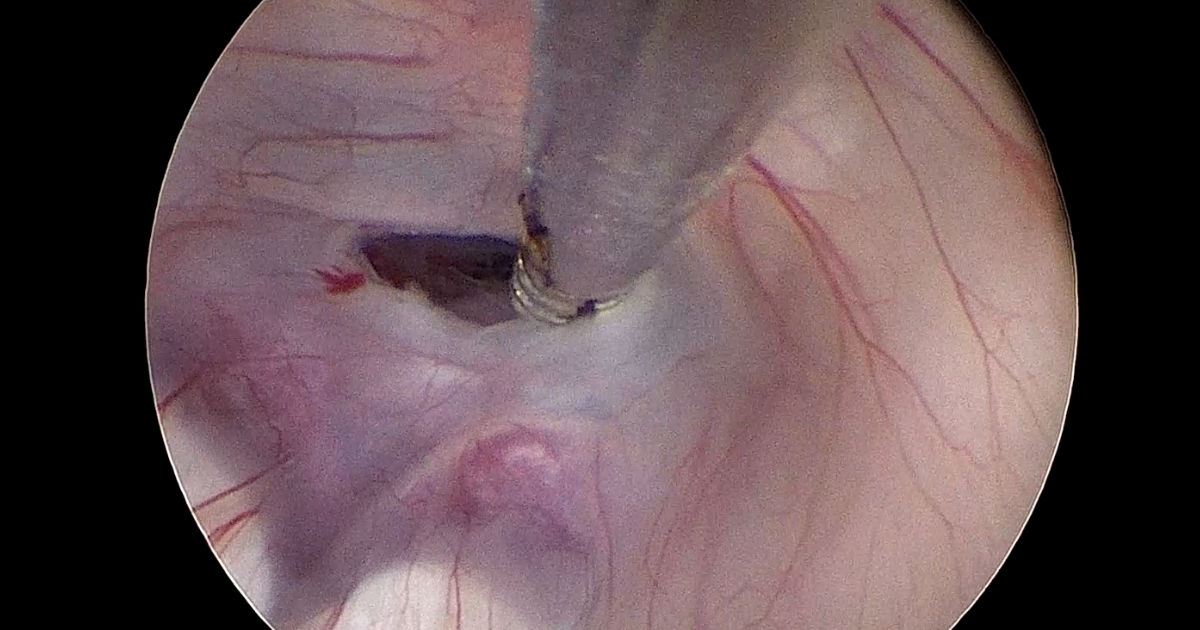
The procedure was done endoscopically: a small opening was made in the floor of the third ventricle to redirect the flow of cerebrospinal fluid along a natural path, without implanting any tube or valve. She leaved the hospital next day of the surgery.
After surgery, her walking gradually steadied, the squint resolved, the incontinence stopped, and the headaches went away. She no longer needs a permanent shunt, and the family now keeps to periodic follow-up scans to confirm the fluid continues to drain normally.
Noticing similar symptoms in your child?
Unsteady walking, a recurring headache, or a sudden change in your child's eye can be worth a prompt evaluation. Our guide on the signs and treatment of hydrocephalus in children covers the condition in full, and the neuroendoscopy service page explains the procedure itself. Visit our contact page for a prompt evaluation.