
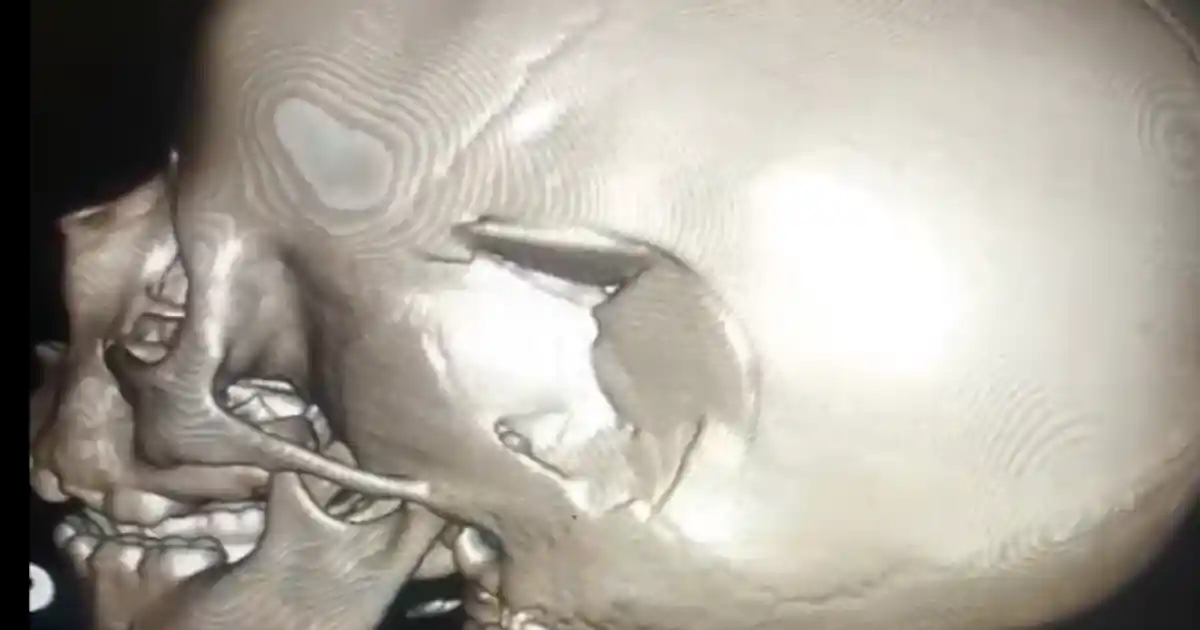
A depressed skull fracture happens when part of the skull bone breaks and is pushed inward from a strong blow, such as in a car accident or a fall from height. Some of these fractures need urgent surgery, while others can be followed without intervention — the decision depends on a careful evaluation of each case.
What Is a Depressed Skull Fracture?
A depressed skull fracture is one where a piece of the skull bone is pushed inward instead of staying level with the surrounding bone, so it approaches or presses on the brain surface. It differs from a simple fracture, which cracks the bone without displacing it, because a depressed fragment can pose a direct risk to the brain if the depression is significant.
What Causes It?
This fracture usually results from a strong, focused blow to a small area of the skull. The most common causes are car accidents, falls from height, and impact with a hard, sharp-edged object. A child's skull bone is thinner and more flexible than an adult's, so it can become depressed under an impact that wouldn't fracture an adult skull under the same circumstances.
What's the Difference Between a Closed and an Open (Compound) Fracture?
In a closed fracture, the scalp over the fracture site stays intact, while an open (or compound) fracture comes with an open wound in the scalp that reaches directly down to the broken bone. An open fracture is more dangerous because it exposes the bone and brain directly to infection through the wound, which is why it's always treated as a case requiring urgent surgery.
What Warning Signs Need Emergency Care?
Go to the emergency room immediately after any head injury in a child if you notice an open wound over a depressed area of the skull, clear fluid draining from the wound or from the nose or ear, repeated vomiting, extreme drowsiness or difficulty waking the child, seizures, or clear weakness in a limb. These signs can indicate an injury that needs rapid evaluation and treatment.
When Is Surgery Necessary?
Several indications are weighed when deciding whether surgery is needed for a depressed skull fracture: the fracture being open (because of infection risk), a cerebrospinal fluid (CSF) leak from the wound, nose, or ear, a neurological deficit such as limb weakness or seizures caused by the bone pressing on the brain, or a visible cosmetic deformity of the skull that needs correcting. Not every depressed fracture needs surgery, but the presence of any of these makes surgery more likely.
How Is the Surgery Done?
The operation involves carefully elevating the depressed bone fragment away from the brain, thoroughly washing the area with sterile solution to remove any contamination or foreign material, then repositioning the bone back into its natural place and fixing it there. Dr. Mazen Agour uses a technique for this procedure published in peer-reviewed international literature. The surgery is relatively safe in most cases, but if there's a tear in the membrane surrounding the brain (the dura) or an underlying brain injury, that membrane needs to be repaired during the operation, along with closer follow-up afterward to watch for fever as an early sign of infection.
How Long Is Recovery and Follow-Up?
The patient typically stays in the hospital for one night after an uncomplicated operation , and stitches are removed after about two weeks . Afterward, the patient needs regular follow-up with the doctor to confirm the repositioned bone has fully united with the surrounding skull, and to watch for any concerning signs such as fever or a change in the appearance of the surgical site.
Book an Appointment
If you have a head injury or an open wound with a suspected skull fracture, urgent evaluation at the nearest emergency room is essential. For non-emergency follow-up or a consultation about a previous skull fracture, you can learn about trauma and emergency neurosurgery with Dr. Mazen Agour, or book an appointment through the contact page.