
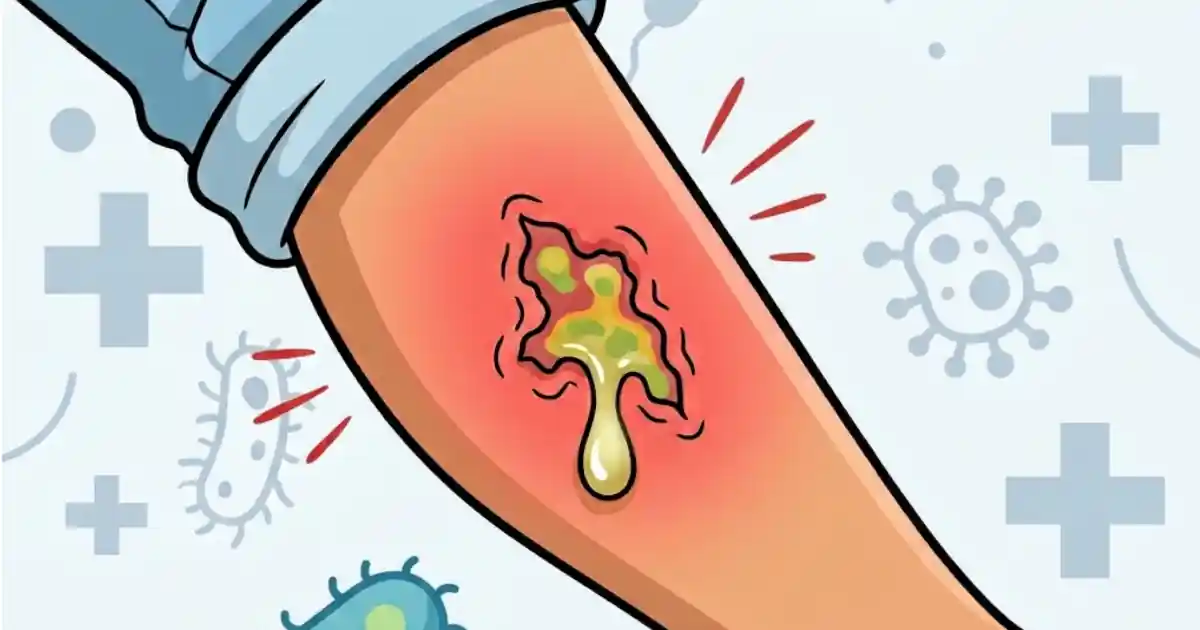
Most surgical wounds heal without any problem over roughly two weeks. A small number become infected, and the earlier that is picked up, the simpler the treatment. This article explains the signs that mean your wound needs a doctor today, not at your next follow up appointment.
What is a wound infection after surgery?
A wound infection is bacteria reaching the surgical wound, which stops normal healing and triggers a visible inflammatory reaction.
The infection may sit superficially in the skin and the tissue just beneath it, or it may extend into deeper layers. The superficial type is the most common, and it usually responds quickly to treatment when it is caught early.
In brain and spine surgery the wound deserves extra attention, because it covers layers that protect the brain or the spinal cord. That is why we never delay assessing a wound that looks suspicious.
How do I tell normal healing from infection?
The most useful rule is this: normal healing gets better every day, infection gets worse every day.
In the first days after surgery it is normal to see mild redness at the wound edge, slight swelling, pain that eases gradually with painkillers, and perhaps a little watery discharge that dries quickly. All of that is part of healing.
The worrying sign is not that these things exist, but that they spread, or that they come back after they had already improved. The direction matters more than any single moment.
What are the signs of a wound infection?
There are five core signs: redness, warmth, swelling, pain and discharge.
- Redness spreading outward instead of shrinking
- Local warmth you can feel when you touch the skin around the wound
- Increasing swelling, or a tight full feeling under the skin
- Pain that increases after day three or four instead of settling
- Yellow or green discharge, or pus
- A bad smell from the wound or from the dressing
- Fever or shivering
Pus and a bad smell are the two signs that must never be left to wait.
When should I see a doctor immediately?
Go the same day if any of these appear, and do not wait for your follow up appointment.
- Redness spreading day after day, or a red streak running away from the wound
- Clear warmth in the skin around the wound
- Severe pain, or pain that starts increasing again after it had begun to settle
- Increasing swelling or a tight bulge under the wound
- Pus, or yellow or green discharge
- A bad smell
- Temperature of 38 degrees Celsius or higher, or chills and shivering
- Wound edges separating or a gap opening between them (wound dehiscence)
- Steady leakage of clear watery fluid after brain or spine surgery (CSF leak)
- New numbness or new weakness in a limb
Go to the emergency department immediately if any of this comes with a severe headache and a stiff neck, confusion, or repeated vomiting.
What causes a wound infection?
The direct cause is bacteria reaching the wound, but several factors make that easier.
- Poorly controlled diabetes
- Smoking, which reduces blood supply to the skin and delays healing
- Obesity or poor nutrition
- A weakened immune system, or long term steroid treatment
- A long operation, or repeat surgery at the same site
- A wet wound or a contaminated dressing at home
Controlling blood sugar and stopping smoking before and after surgery are the two things that reduce this risk most in practice.
Does every bit of redness mean infection?
No. Mild, stable redness at the wound edge in the first days is a normal part of healing.
The difference is direction and timing. Normal redness is limited, does not spread, settles gradually, and comes with no warmth, no pus and no fever.
Redness that widens every day, or returns after it had gone, or comes with any other warning sign, needs to be examined.
There is also surgical tape allergy, which causes redness and itching around the wound but without warmth or discharge. A doctor tells the two apart on direct examination.
How is an infected wound treated?
Treatment starts with examining the wound directly, and the rest depends on how deep the infection goes.
For a simple superficial infection, an appropriate antibiotic with regular dressings and close follow up is usually enough.
If pus has collected, part of the wound is opened to drain it, and a swab may be taken to identify the bacteria and choose the most precise antibiotic.
For deeper or late cases the patient may need a surgical washout in theatre. This is less common, and coming in early usually avoids it.
How do I care for the wound to reduce the risk?
The simplest rule is to keep the wound clean and dry, and only touch it with washed hands.
- Wash your hands thoroughly before any dressing change
- Follow your surgeon's instructions on when to shower and how to dry the wound
- Do not put creams, herbs or powders on the wound
- Do not remove stitches or clips yourself
- Stop smoking completely during the healing period
- Keep your blood sugar controlled if you are diabetic
- Photograph the wound daily in the same lighting, because comparison reveals spread early
- Do not postpone dressing changes and follow up visits
You can read patient success stories after surgery to see how follow up works in practice.
Book an Appointment
If you notice any warning sign in your wound, do not wait. An infected wound seen early is a small problem, and delay is what makes it difficult.
You can read more about the services I provide, or use the contact page to arrange an appointment at the clinic in El-Bagour, Menoufia.