If things keep slipping out of your hand, or your little and ring fingers stay numb, the cause may be pressure on the ulnar nerve at the elbow. The condition is common, and most mild cases improve without surgery, but cases left until the hand muscles waste rarely regain their full strength.
What is the ulnar nerve?
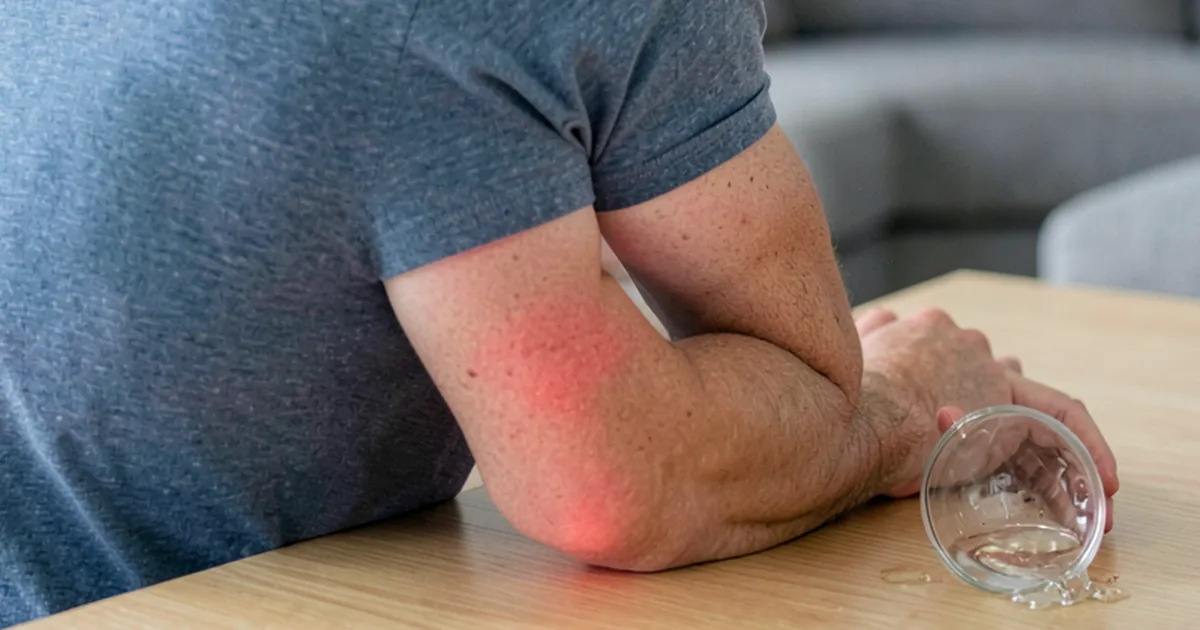
The ulnar nerve is the nerve that runs behind the elbow, at the spot that gives you an electric jolt when you knock it, your "funny bone".
It provides feeling to the little finger and half of the ring finger, and it controls most of the small hand muscles responsible for fine movements and grip strength. Because it sits close to the surface behind the elbow, with little muscle to protect it, it is more exposed to pressure than most nerves.
Compression of the nerve at the elbow is called cubital tunnel syndrome, and it is the second most common nerve entrapment in the arm after carpal tunnel syndrome at the wrist.
What are the symptoms of ulnar nerve compression?
Symptoms usually start with numbness, and weakness follows if the pressure continues.
- Numbness or tingling in the little finger and half the ring finger, worse when the elbow stays bent
- Numbness that wakes you at night, especially if you sleep with your arm bent
- Pain or an electric feeling on the inner side of the elbow
- A weaker grip and things slipping from your hand
- Difficulty with fine tasks such as buttoning a shirt, writing, or opening jars
- In advanced cases: visible wasting of the hand muscles, especially between the thumb and index finger, and clawing of the little and ring fingers
What causes ulnar nerve compression?
The most common cause is repeated pressure or constant stretching of the nerve behind the elbow.
- Leaning on the elbow for long periods, on a desk or a car window ledge
- Keeping the elbow bent for long periods, such as holding a phone or sleeping with a hand under your head
- Work that involves repeatedly bending and straightening the elbow
- An old elbow fracture, even years after it has healed
The last cause is the one patients most easily miss. A fracture can heal well on the surface yet slightly change the shape of the elbow, so the nerve is stretched and rubbed with every movement for years. This is called tardy ulnar palsy, and patients rarely connect their numb hand today with a fracture they forgot long ago. That is why I ask every patient with little-finger numbness: have you ever injured your elbow, even as a child?
When should you see a doctor urgently?
Don't delay an assessment if you notice any of these signs:
- Numbness in the little and ring fingers that doesn't go away, or keeps getting worse over weeks
- A weakening grip and things dropping from your hand
- Growing difficulty with fine tasks such as doing up buttons
- Wasting of the hand muscles, especially between the thumb and index finger
- Hand numbness after an elbow injury or fracture
Muscle wasting is a late sign. Treatment before it appears gives the hand a better chance to recover.
Is all hand numbness caused by the ulnar nerve?
No. Where the numbness is gives the first clue to which nerve is involved.
- Numbness in the little finger and half the ring finger usually points to the ulnar nerve.
- Numbness in the thumb, index and middle fingers usually points to the median nerve at the wrist (carpal tunnel syndrome).
- Numbness that starts in the neck and travels down the arm may come from a pinched nerve root in the neck, such as a herniated (slipped) disc in the cervical spine.
The symptoms can overlap, which is why diagnosis needs a careful examination rather than a guess.
How is it diagnosed?
Diagnosis starts with a clinical examination and is confirmed with nerve conduction studies.
The doctor checks feeling in the fingers and the strength of the small hand muscles, and presses on the nerve behind the elbow to see whether that reproduces the symptoms. Then a nerve conduction study and EMG pinpoint exactly where the nerve is compressed and how badly.
In some cases we also request an X-ray of the elbow, especially after an old fracture, or imaging of the neck to rule out another cause.
Can it be treated without surgery?
Yes. Mild cases with intermittent numbness and no weakness usually improve without surgery.
- Avoid leaning on the elbow
- Avoid keeping the elbow bent for long periods, and use a headset for phone calls
- A light night splint that keeps the elbow nearly straight while you sleep
- Nerve-directed medication at your doctor's discretion
This treatment is usually given a few weeks to a few months, with follow-up.
When is surgery necessary?
Surgery becomes the better option when weakness appears in the hand muscles, numbness worsens despite treatment, or the nerve study shows severe compression.
After an old elbow fracture the cause is mechanical and won't go away on its own, so waiting usually means more damage. The Spine & Peripheral Nerve Surgery page describes the peripheral nerve operations we perform.
How is the surgery done?
The aim of surgery is to take the pressure off the nerve, and the technique depends on the cause.
Sometimes freeing the nerve where it lies is enough. In other cases, especially after old fractures or when the nerve slips out of place as the elbow bends, we move the nerve from behind the elbow to a safe position in front of it (ulnar nerve transposition), away from the stretching and friction. We may also free the nerve from scar tissue inside it (internal neurolysis) if this has built up over the years.
You can read the story of a man in his fifties whose elbow fracture had healed years earlier while his ulnar nerve kept struggling.
How long does recovery take after surgery?
Most patients go home the same day or the day after surgery, and gentle elbow movement starts within days.
Nerve recovery itself, however, is slow by nature. Numbness and pain may improve within weeks, while muscle strength takes months, and how much improves depends largely on how long the nerve was compressed and whether wasting had already begun.
Book an appointment
If your little and ring fingers stay numb, or things have started slipping from your hand, an early assessment protects the muscles of your hand. Book an assessment at the clinic in El Bagour, Menoufia, through our contact page, or read more about Spine & Peripheral Nerve Surgery.